Standard Bike Box Dimensions: Sizes, Fit and Shipping Tips
This post contains Amazon affiliate links. As an Amazon Associate I earn from qualifying purchases, at no extra cost to you.
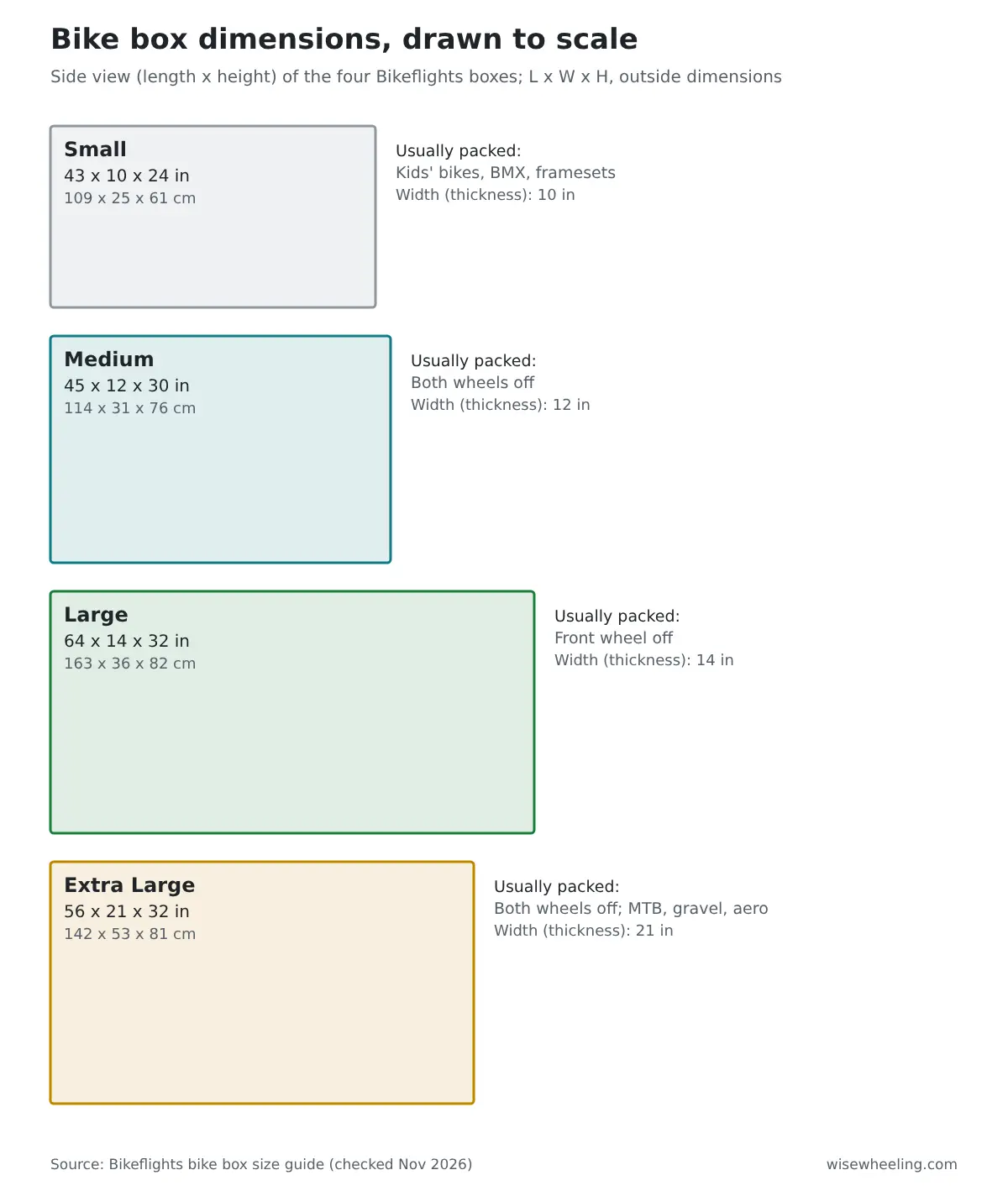
There is no single standard bike box size. Current boxes for shipping a bike range from about 43 x 10 x 24 inches (a small box for kids’ bikes and framesets) up to 64 x 14 x 32 inches (a large box for full-size bikes with the front wheel removed). The older “standard” figure of 43 x 11 x 32 inches (110 x 28 x 82 cm) comes from an earlier cardboard box design, so measure your own bike after you take it apart and match that to the box.
Bike box dimensions by size
These are the assembled outside dimensions (length x width x height) Bikeflights lists for its four current boxes, which are the most widely published sizes for shipped bikes. Shop boxes and other brands differ by an inch or two, so always check the exact box you plan to buy.
| Box | Inches (L x W x H) | Centimeters | How it is usually packed |
|---|---|---|---|
| Small | 43 x 10 x 24 | 109 x 25 x 61 | Kids’ bikes, BMX bikes and framesets |
| Medium | 45 x 12 x 30 | 114 x 31 x 76 | Both wheels removed |
| Large | 64 x 14 x 32 | 163 x 36 x 82 | Front wheel removed |
| Extra Large | 56 x 21 x 32 | 142 x 53 x 81 | Both wheels removed; gravel, aero road, triathlon, fat and mountain bikes; road and gravel bikes may keep the bars on |
Check whether your packed bike fits a box
Measure your bike after the disassembly you plan to do, enter the three packed dimensions, and the checker compares them with the boxes above. It leaves 2 inches of padding room on each dimension, which is a rule of thumb, not a carrier rule.
How to measure your bike for a box
Measure after the exact disassembly you plan to do, because the assembled bike tells you little once the wheels, bars and pedals come off.
- Remove the pedals and the wheels you plan to remove (the front wheel for a large box, both wheels for a medium or extra large box).
- Turn or remove the handlebars. Bikeflights notes that mountain bikes almost always need the bars removed in any box.
- Lower or remove the seatpost if it sticks up past the frame.
- Measure the packed bike’s length, height and width at the widest and tallest points: usually the fork or frame for length, the saddle or seatpost for height, and the bars, rear derailleur or pedal side for width.
- Compare those numbers with the box, leaving room for padding around the fork ends, rear derailleur and rotors.
What usually fits, by bike type
These are practical starting points, not guarantees. Frame size, tire width and bar width change the answer, so check with the measurements above.
- Road bike: usually fits a large box with the front wheel off, or a medium box with both wheels off. A frame around 58 to 61 cm can need the larger option.
- Gravel bike: similar to a road bike, but wide flared bars and large tires can push you to the extra large box. See what size gravel bike frame you need if you are unsure of your frame size.
- Hybrid or commuter: flat bars need width clearance, so turn or remove them.
- Mountain bike: Bikeflights lists mountain bikes under its extra large box. Full-suspension bikes with long wheelbases and wide bars are the tightest fit. See hardtail vs full suspension for how suspension layout changes the frame shape.
- Kids’ bike: often fits the small box.
Cardboard box, shipping box or hard case
| Option | Best for | Main limitation |
|---|---|---|
| Bike shop cardboard box | Local transport, budget moves | Inconsistent protection; sizes vary by brand |
| Shipping-specific cardboard box | Courier shipping | Costs more than a free shop box |
| Hard travel case | Frequent flyers, carbon or expensive bikes | Heavy and bulky; compare bike travel cases and check the current price there |
Airlines and carriers set their own size and weight limits, and they change often. Check your airline’s or carrier’s current bicycle policy for the packed box dimensions and weight before you pay for a box. Weigh the packed box before pickup or check-in.
Before you seal the box
- Take photos of the bike before packing.
- Remove the pedals and protect the threads; bag and label loose parts.
- Pad the frame tubes, fork tips, rear derailleur area and rotors. Axle ends and wide bars are the usual clearance problems.
- Let some air out of the tires if your carrier requires it.
- Finish repairs first so you are not unpacking a bike that rubs or shifts badly: see how to adjust bike brakes, and common bike fit problems if the cockpit needs sorting before the trip.
Suryashankar Dasgupta founded Wise Wheeling. He has been cycling for more than 20 years, on geared and single-speed bikes, across many kinds of terrain. His guides cover bike repair, fit and gear, and each one is checked against manufacturer manuals, Park Tool and other primary sources before it’s published. Read how guides are made: https://wisewheeling.com/editorial-policy/