How to Install a Motor on a Bicycle: Kit Types and Steps
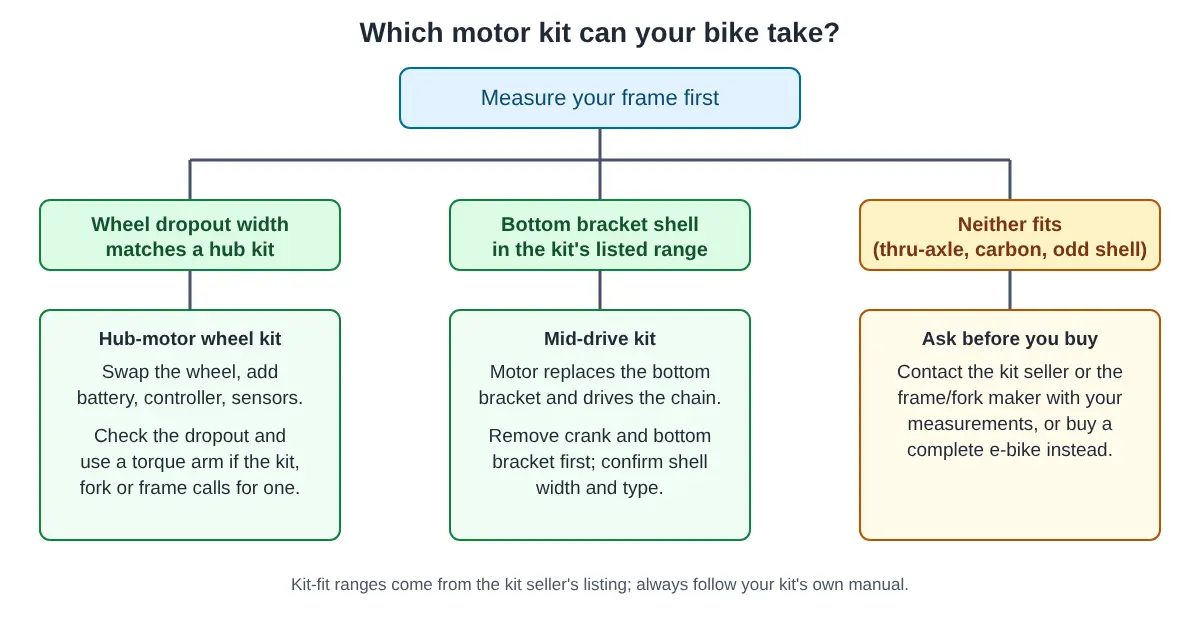
Most bikes can take a motor in one of two ways: a hub-motor wheel that replaces your front or rear wheel, or a mid-drive motor that replaces the bottom bracket. Which one works depends on two measurements, your wheel dropout width and your bottom bracket shell width, so take those before you buy anything. Gas-engine kits exist too, but the rest of this guide covers electric kits because they are the common bolt-on route.
Hub motor or mid-drive?
| Front hub | Rear hub | Mid-drive | |
|---|---|---|---|
| What you swap | Front wheel | Rear wheel | Bottom bracket and crank |
| Fit check | Fork dropout width and strength | Rear dropout width and strength | Shell width and type |
| Where the load goes | Into the fork dropouts | Into the rear dropouts | Into the bottom bracket shell and chain |
| Harder part | Torque arm and fork fit | Cassette or freewheel fit, torque arm | Removing crank and bottom bracket |
The load-path row matters. A hub motor’s reaction torque goes into the dropouts, and repeated torque can spread, deform, crack or enlarge a dropout slot. One kit retailer’s guidance is simple: if the motor, kit, fork or frame instructions require a torque arm, use one, and treat thin or weak dropouts as a higher-priority case. Read em3ev’s torque arm guide before fitting a hub motor, especially in front.
Check the law before you buy
Federal law defines a “low-speed electric bicycle” as a two- or three-wheeled vehicle with fully operable pedals and an electric motor under 750 watts whose top speed on a level paved surface, powered by the motor alone with a 170-pound rider, is under 20 mph (see Public Law 107-319). Under the common three-class system, Class 1 assists only while pedaling up to 20 mph, Class 2 can propel the bike on the throttle with assist ending at 20 mph, and Class 3 assists up to 28 mph (PeopleForBikes). A kit that pushes your bike past those limits can put it in a different legal category.
Licensing, registration and where you may ride are set by state law, and they vary. Check your state’s rules before you ride, or ask your DMV. Our post on riding a motorized bicycle without a license goes into the question.
Federal bicycle rules for low-speed e-bikes also set mechanical requirements such as brakes, so make sure your brakes work well before adding power. See our brake adjustment guide. For the rule itself, see CPSC’s bicycle requirements guidance.
Will your bike fit a kit? Quick checker
Kit fit checker
The checker only compares your numbers with what the seller lists. Retailer listings for Bafang mid-drive kits, for example, say the BBS02B suits a 68 mm or 73 mm bottom bracket (see GreenBikeKit’s BBS02B listing), and the BBSHD is sold in 68/73 mm and 100/110/120 mm shell versions (GreenBikeKit’s BBSHD core listing). Always use the numbers from your own kit’s manual.
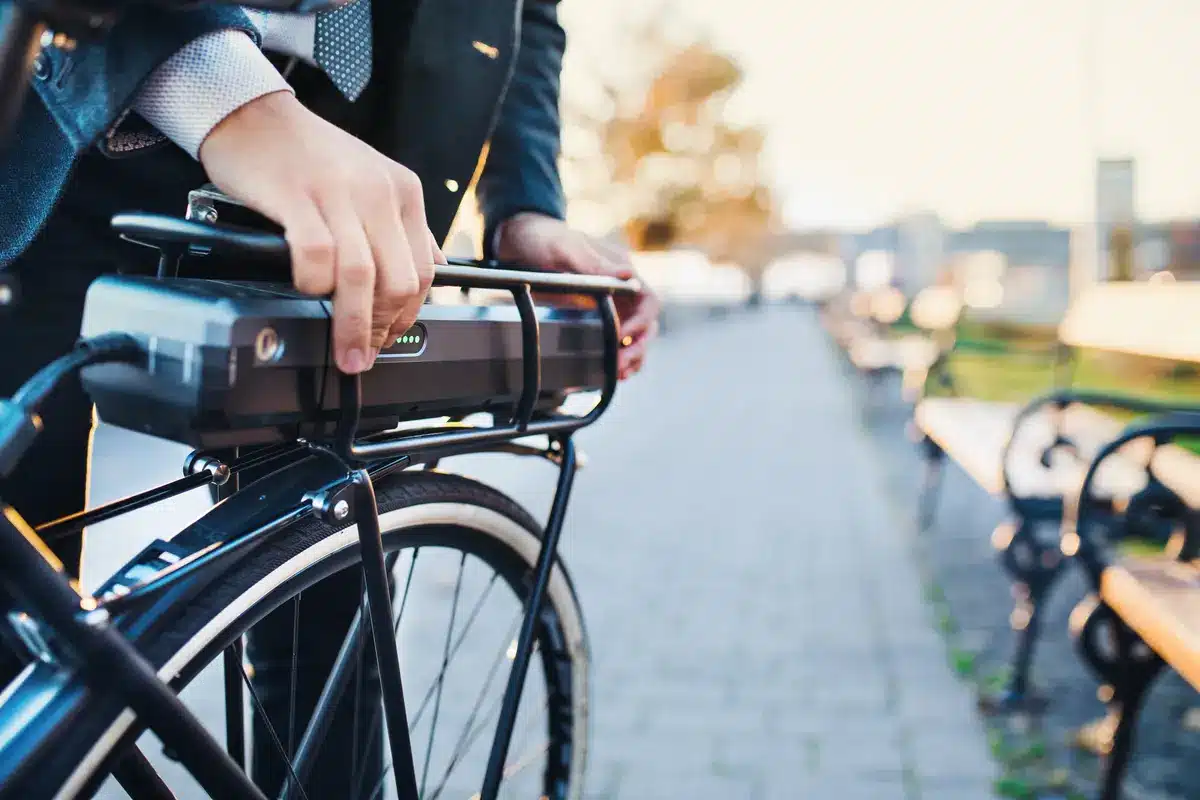
Install order for a hub-motor kit
- Read the kit manual first. It gives the torque values, cable lengths and wiring colors for that motor, which this guide can’t.
- Measure your dropout width and compare it with the kit’s listing using the checker above.
- Remove the old wheel. Fit your tire and tube to the motor wheel the way you would any wheel, and set pressure within the range printed on the tire sidewall.
- Install the motor wheel with the torque arm if the kit or frame calls for one, and tighten the axle nuts to the kit’s torque.
- Mount the battery and controller, following the kit’s mounting points.
- Route the motor cable along the frame with ties, leaving slack at the steering and suspension, and keep it clear of the chain and brake rotor.
- Fit the throttle or pedal-assist sensor, display and brake cut-off sensors if the kit has them.
- Test with the wheel off the ground before you ride, then check that nothing rubs, then ride slowly in a quiet area.
Install order for a mid-drive kit
- Check the bottom bracket shell width and type against the kit’s listing.
- Remove the crank and bottom bracket. See our guide to removing a crank and the bottom bracket finder to identify what you have.
- Install the motor through the shell and secure it with the lockring and mounting plate as the kit manual shows.
- Fit the crank arms and chainring, then check chain line and that the chain runs clear.
- Add battery, display, speed sensor and brake cut-offs, and route the cables.
- Test on a stand, then ride slowly before you go full speed.
What about gas-engine kits?
Gas kits are a separate project and laws on them vary more by state. Our posts on starting one with a drill and on the license question cover those angles. Check your state’s motorized bicycle rules before you buy.
Common questions
How do I add a motor to a bike?
Pick a hub-motor wheel or mid-drive kit that matches your dropout or bottom bracket measurements, then install it and its battery and controller following the kit manual.
Can I put an engine on a bike?
Yes, gas-engine kits are sold, but state laws on motorized bicycles differ. Check your state’s rules first.
Do I need a torque arm?
If your kit, fork or frame instructions require one, yes. Thin or weak dropouts and high-torque motors raise the priority.
Suryashankar Dasgupta founded Wise Wheeling. He has been cycling for more than 20 years, on geared and single-speed bikes, across many kinds of terrain. His guides cover bike repair, fit and gear, and each one is checked against manufacturer manuals, Park Tool and other primary sources before it’s published. Read how guides are made: https://wisewheeling.com/editorial-policy/